If You Think Russian Interference Is Bad, See What This Country Was Caught Doing
GoLocalProv News Team
If You Think Russian Interference Is Bad, See What This Country Was Caught Doing
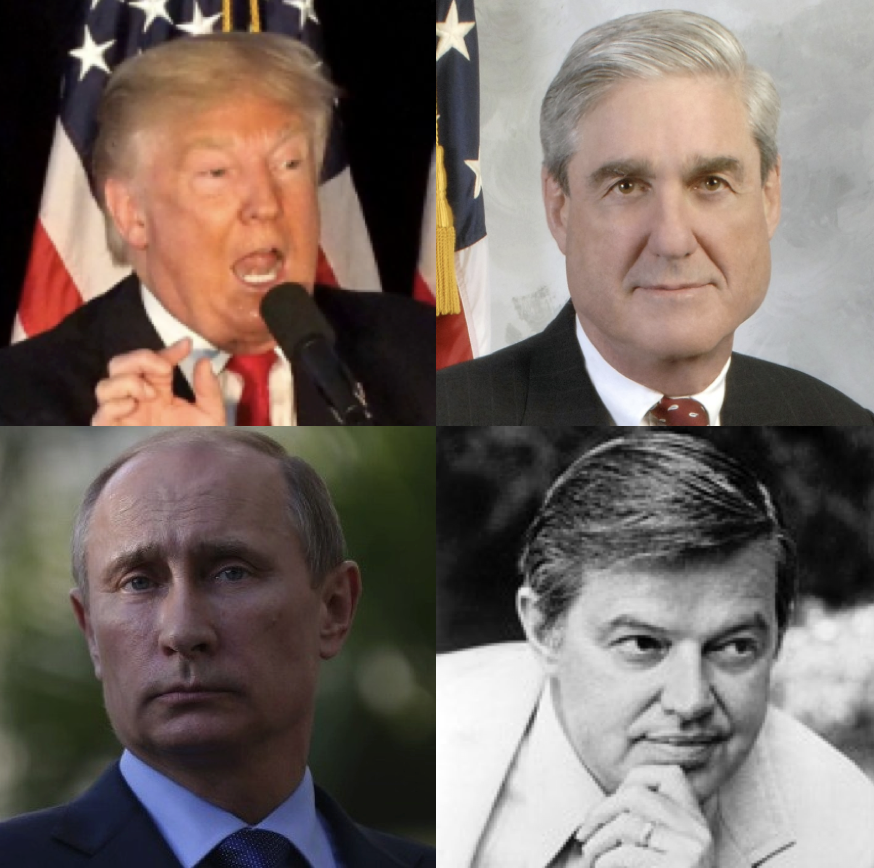
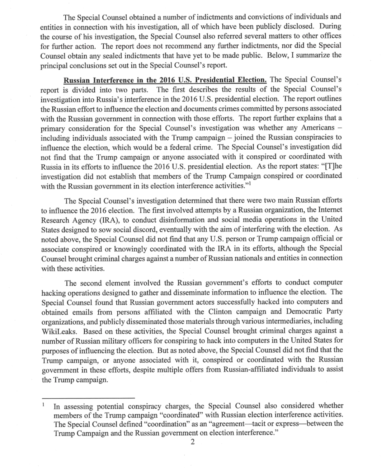
“The Russian government interfered in the 2016 presidential election in sweeping and systematic fashion. Evidence of Russian government operations began to surface in mid-2016. In June, the Democratic National Committee and its cyber response team publicly announced that Russian hackers had compromised its computer network. Releases of hacked materials-hacks that public reporting soon attributed to the Russian government-began that same month. Additional releases followed in July through the organization WikiLeaks, with further releases in October and November,” found the Mueller report.
“The Internet Research Agency (IRA) carried out the earliest Russian interference operations identified by the investigation - a social media campaign designed to provoke and amplify political and social discord in the United States. The IRA was based in St. Petersburg, Russia, and received funding from Russian oligarch Yevgeniy Prigozhin and companies he controlled. Prigozhin is widely reported to have ties to Russian President Vladimir Putin," wrote Mueller.
GET THE LATEST BREAKING NEWS HERE -- SIGN UP FOR GOLOCAL FREE DAILY EBLASTDecades earlier, a United States Senate special investigation found that one country plotted coups, undermined elections, and funded mass propaganda campaigns designed to change the results of popular elections.
The Senate Committee found that this country directly conspired with one of the largest tech companies to undermine popular elections and democracies.
The Senate Committee leading the investigation included many of the chambers most respected members, including Senators Walter Mondale (D-MN), Barry Goldwater (R-AZ), Charles Mathias (R-MD), Howard Baker (R-TN), Gary Hart (D-CO), and John Tower (D-TX).
The committee was chaired by Frank Church (D-ID).
United States Senate Select Committee to Study Governmental Operations with Respect to Intelligence Activities was a U.S. Senate select committee established in 1975 that investigated abuses by the Central Intelligence Agency (CIA), National Security Agency (NSA), Federal Bureau of Investigation (FBI), and the Internal Revenue Service (IRS).
The Russian activity pales in comparison.
The committee undercovered widespread efforts by U.S. agencies to secretly and illegally overthrow foreign government and in some cases plan and fund assassinations of foreign leaders. The committee uncovered how U.S. agencies conspired with American business interests and the then-largest "technology" companies of the time to undermine elections and control Chile. International Telephone and Telegraph (ITT) controlled the communication infrastructure of Chile and directly funded efforts to impact elections and to support far-right political and military groups.
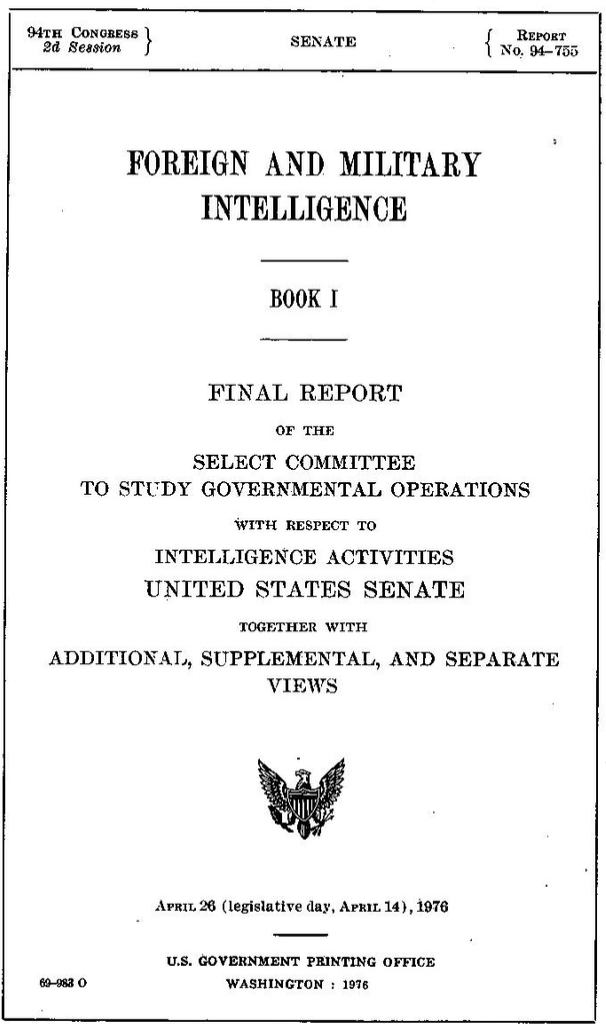
The so-called “Church Committee” issued a number of findings in a series of reports. And, in one report found direct ties between the CIA and political assassinations.
"The Senate Select Committee on Intelligence was told today about domestic covert operation's by the Central Intelligence Agency that the panel's chairman, Senator Frank Church, later said the CIA had 'exceeded the law,'" reported the New York Times, May 22, 1975.
These politically destabilizing activities were conducted under the leadership of two Democratic presidents and one Republican — John F. Kennedy, Lyndon B. Johnson, and Richard M. Nixon.
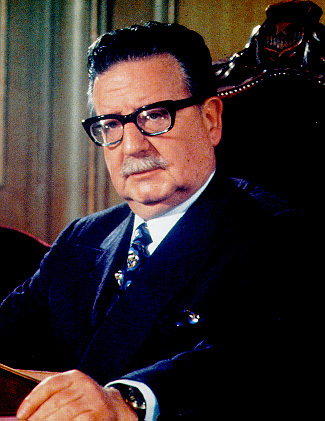
"United States covert efforts to affect the course of Chilean politics reached a peak in 1970: the CIA was directed to undertake an effort to promote a military coup in Chile to prevent the accession to power of Salvador Allende," found the report.
GoLocal has reviewed the 40 plus-year-old, 60-page final report and identified a number of findings that make may offer greater perspective into the actions of foreign powers to interfere in other countries self-governance and elections.
The following are excerpts from the report citing the United States direct interference in the governance and elections in Chile. In Chile alone, over a decade this country spent over $13 million — today’s dollars the amount would equal $74 million today.
"The covert propaganda efforts in Chile also included "black" propaganda-material falsely purporting to be the product of a particular individual or group."
"What did covert CIA money buy in Chile? It financed activities covering a broad spectrum, from simple propaganda manipulation of the press to large-scale support for Chilean political parties, from public opinion polls to direct attempts to foment a military coup. The scope of "normal" activities of the CIA Station in Santiago included placement of Station-dictated material in the Chilean media through propaganda assets, direct support of publications, and efforts to oppose communist and left-wing influence in student, peasant and labor organizations."
"The CIA attempted, directly, to foment a military coup in Chile. It passed three weapons to a group of Chilean officers who plotted a coup. Beginning with the kidnapping of Chilean Army Commander-in-Chief Gen. Schneider. However, those guns were returned. The group which staged the abortive kidnap of Schneider, which resulted in his death, apparently was not the same as the group which received CIA weapons."
"The pattern of United States covert action in Chile is striking but not unique. It arose in the context not only of American foreign policy, but also of covert U.S. involvement in other countries within and outside Latin America. The scale of CIA involvement in Chile was unusual but by no means unprecedented."
"The most extensive covert action activity in Chile was propaganda. It was relatively cheap. In Chile, it continued at a low level during "normal" times, then was cranked up to meet particular threats or to counter particular dangers. The most common form of a propaganda project is simply the development of "assets" in media organizations who can place articles or. be asked to write them. The Agency provided to its field Stations several kinds of guidance about what sorts of propaganda were desired. For example, one CIA project in Chile supported from one to five media assets during the seven years it operated (1965-1971). Most of those assets worked for a major Santiago daily which was the key to CIA propaganda efforts. Those assets wrote articles or editorials favor,- able to U.S. interests in the world (for example, criticizing the Soviet Union in the wake of the Czechoslovakian invasion) ; suppressed news items harmful to the United States (for instance about Vietnam); and authored articles critical of Chilean leftists. The covert propaganda efforts in Chile also included "black" propaganda-material falsely purporting to be the product of a particular individual or group. In the 1970 election, for instance, the CIA used "black" propaganda to sow discord between the Communists and the Socialists and between the national labor confederation and the Chilean Communist Party."
"In addition to buying propaganda piecemeal, the Station often purchased it wholesale by subsidizing Chilean media organizations friendly to the United States. Doing so was propaganda writ large. Instead of placing individual items, the CIA supported-or even founded-friendly media outlets which might not have existed in the absence of Agency support."
"United States covert efforts to affect the course of Chilean politics reached a peak in 1970: the CIA was directed to undertake an effort to promote a military coup in Chile to prevent the accession to power of Salvador Allende."
"President Nixon met with ‘Richard Helms, the Director of Central Intelligence, Assistant to the President for National Security Affairs Henry Kissinger and Attorney General John Mitchell. Helm's was' directed to prevent Allende from taking power. This effort was to be conducted without the knowledge of the Departments of State' and 'Defense or the Ambassador. Track 11 vas never discussed at a 40 Committee meeting. It quickly became apparent to both White House and, CIA officials that a military coup was the only way to prevent Allende's accession to power. To achieve that end, the CIA established contact with several groups of military; plotters and eventually passed three weapons and tear gas to one group."
COVERT ACTION AND MULTINATIONAL CORPORATIONS
"In addition to providing information and cover to the CIA. multi-national corporations also participated in covert attempts to influence Chilean politics. The following is a brief description of the CIA's relationship with one such corporation in Chile in the period 1963-1973- International Telephone and Telegraph, Inc. (ITT). Not only is ITT the most prominent and public example, but a great deal of information has been developed on the CIA/ITT relationship. This summary is based on new information provided to this Committee and on material previously made public by the Subcommittee on Multinational Corporations of the Senate Foreign Relations Committee."
"The United States was involved in a massive scale in the 1964 presidential election in Chile. The Special Group authorized over three million dollars during the 1962-64 period to prevent the election of. a Socialist or Communist candidate. A total of nearly four million dollars was spent on some fifteen covert action projects, ranging from organizing slum dwellers to passing funds to political parties."
"A group of American businessmen in Chile offered to provide one and a half million dollars to be administered and disbursed covertly by the U.S. Government to prevent Allende from winning the 1964 presidential election. This offer vent to the 303 Committee (the name of the Special Group after June 1964) which decided not to accept the offer. It decided that offers from American business could not be accepted, that they were neither a secure way nor an honorable way of doing business. This decision was a declaration of policy which set the precedent for refusing to accept such collaboration between CIA and private business. However, CIA money, represented as private money., was passed to the Christian Democrats through a private businessman."
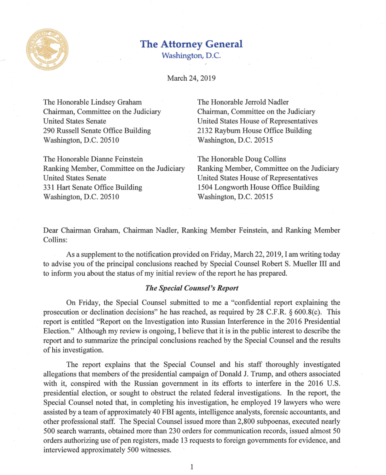
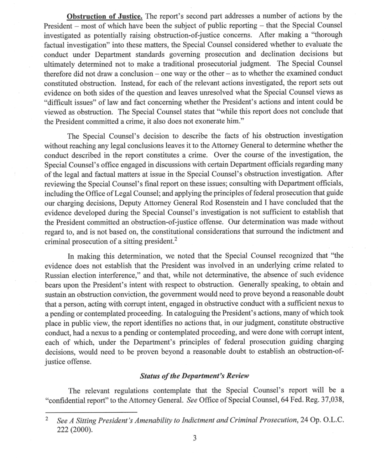
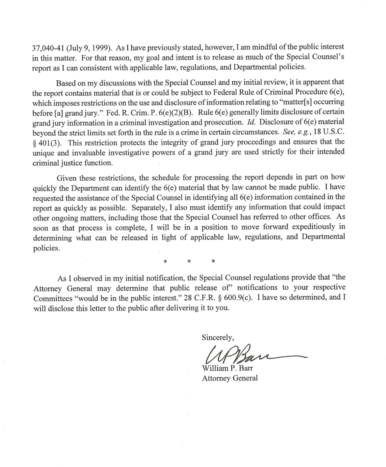
U.S. Attorney General Barr's Letter to Congressional Leaders on Mueller Report March 24, 2019