


Pawtucket Mayor Defends Borrowing Money to Balance Budget
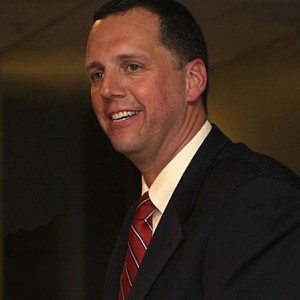
Don Grebien, Mayor of Pawtucket and Guest GoLocalProv MINDSETTER™
Pawtucket Mayor Defends Borrowing Money to Balance Budget
When my administration took office less than 90 days ago, we were saddled with a current-year funding gap that peaked around $13.9 million, as well as long-term pension and retiree health benefit shortfalls in the many tens of millions of dollars.
Those budget holes, both short and long term, were not built in a day. They are, in the description used by the state Department of Revenue, to which we have submitted a five-year debt stabilization plan and worked closely to find remedies short of going the way of Central Falls, the result of a "cumulative deficit inherited from prior years."
GET THE LATEST BREAKING NEWS HERE -- SIGN UP FOR GOLOCAL FREE DAILY EBLAST
The truth of that statement may define our problem but of itself offers no single, easy, solution. These fiscal problems that were not built in a day will not be fixed in a day either. That is why my administration has lost no time in taking a multi-faceted approach, although with one
shared purpose: To reduce our levels of spending, while seeking to enhance our revenues.
I began with the things my administration could directly control. We immediately instituted a 25 percent medical co-pay for non-union workers, saving $143,000. We consolidated jobs in the Mayor's Office to save more than $44,000, and in total saved $854,000 by not filling positions.
In less than two months, I was able to cut $1.4 million on the city side of the budget. And by working cooperatively with school officials, instead of using them as a scapegoat as some have done in the past, we achieved a $5.8 million reduction in their deficit.
That was a good start but of course it did not solve all our problems. No one thing can, and anyone who tells you otherwise is promising you a magic wand that simply does not exist.
Then, barely five weeks into my administration, a national rating agency looked at our inherited cumulative deficit and knocked our credit rating down several notches, as another rating agency had done last summer. Meanwhile our unbalanced budget left us with a cash flow problem so severe the city faced running out of cash to fund daily operations and services before this month was over, with the last quarter of the fiscal year yet to come. Still, our credit rating remained, unlike some other struggling communities in the state, above the "junk" level that could seriously impact our ability to borrow.

One was to hit our taxpayers with a supplemental tax increase, which I steadfastly opposed because in this economy our residents and businesses simply cannot absorb getting tax hikes twice in one fiscal year.
The other unacceptable choice was to risk a state takeover, where our future would be in the hands of the state instead of our own, as we saw happen to our neighboring city of Central Falls.
That left us one course to navigate, as I urged to the City Council: To borrow short-term notes in anticipation of the new tax revenues that will begin coming in with the new fiscal year that starts on July 1, buying us time to continue our cost reductions. That that course was the best choice in the circumstances was shown when the Council, while expressing its reservations, gave its approval last week with only one negative vote.
Buying time does not mean standing still. I have instructed my department directors to show how each would cut 10 percent in their operations costs. My finance team is also assembling a series of other significant cost reductions that will be in the new city budget we will
submit in the coming weeks, while we also continue seeking ways to enhance our revenues.
An author once said that, for every complex problem, there is a solution that is simple, neat, and wrong.
For some, that solution means cutting city workers by the score. What they fail to take into account is that because Pawtucket is self-insured, we must pay laid-off workers two-thirds of the
compensation they were receiving. Thus three workers must be cut to get a one-worker reduction in savings, while uselessly spiking up overtime. I remain committed to reducing our workforce wherever we can, but not to where it decimates the services our taxpayers pay for and deservedly
expect.
Others say the solution is to simply ignore existing union contracts—because it is in those contracts, as we all know, that the real long-term savings are to be found—to make the changes we want. But that is an emotional and foolhardy course of action, because it would
only enrich a few lawyers in the short term, drag us through cases that the courts have long shown cannot be won, and in the end bring none of the lasting changes we need.
But those changes can be won by the kind of hard bargaining that for too long the city has not been willing to bring to the table. Even the unions must acknowledge the City can no longer sustain operations where outmoded rules force budget hits of $2 million for overtime that are
still exceeded half-again.
We can also offer shared services to other communities that will reduce their costs while enhancing our bottom line. And we can, and will, bring in new businesses that will bring in new revenues.
Most of all, we can - and must -- operate our City in a way that is both efficient and cost effective, and that once again puts us on the course to a sound and stable financial future.