


Secrets and Scandals: Reforming Rhode Island 1986-2006, Chapter 40 (Cont...)
H. Philip West Jr.
Secrets and Scandals: Reforming Rhode Island 1986-2006, Chapter 40 (Cont...)
Black plaintiffs from the South Side of Providence were first through the federal courthouse door. Their suit claimed the final Senate plan “unnecessarily diluted the voting strength of black voters” while it was possible to draw a map that did not. “We are not alleging discriminatory intent,” said Anita Hodgkiss, director of voting rights for the Lawyers’ Committee for Civil Rights under Law. “We are just saying the impact of the districts — for whatever reason they put them there — has the effect of denying black voters an equal opportunity.”
Hodgkiss spoke with a quiet certainty born of experience. She embodied a long record in federal courts and knowledge of stratagems used in various states. We were relative novices, but she was more than a match for Kim Brace and his redistricting software.
“The effect is simple,” she told reporters. “It undermines African-American voting strength and participation. This is not an isolated case. We are seeing this in a variety of places throughout the country as state elected officials engage in redistricting efforts.” The suit asked the U.S. District Court to block Senate elections until the map could be completely redrawn. New districts, she declared, must be drawn for primary elections in September and the general election in November.
GET THE LATEST BREAKING NEWS HERE -- SIGN UP FOR GOLOCAL FREE DAILY EBLASTLatinos filed their suit with a late afternoon news conference in Kennedy Plaza, across from the massive federal courthouse. Speakers contended with the roar of busses arriving and leaving the open-air hub. “Redistricting is designed to take into account changes in population,” Nellie Gorbea shouted over the din. Gorbea was president of the Rhode Island Latino Political Action Committee (RILPAC), one of six predominantly Hispanic groups that filed the suit. “By not drawing a Senate District in South Providence that has Latinos as a majority of its voting-age population,” she said, “the state has violated the voting rights of Latinos in Providence.”
Pablo Rodriguez, also from RILPAC, followed her. “We are being told to yet again wait our turn. If we need to wait for ten years, then what is the point of redistricting?” He argued that political power for one minority group must not come at the expense of another. “In this case, given the current maps, it comes at the expense of both African-Americans and Latinos.”
Predictably, Senate Majority Leader Bill Irons, whose redistricting maps were the target of both lawsuits, defended his plan. He predicted that as more Hispanics reached voting age there would be “significant potential” to elect five Hispanic senators. “I have great respect for the Latino community, but I disagree with their position on this issue. The problem Latinos have is that they are a young population.”
Plaintiffs from the East Bay faced different challenges in Rhode Island Superior Court. Senate leaders had chopped Bristol into three parts. Little Compton and Tiverton, on the mainland east of the Sakonnet River, suffered a less grievous split but joined in Bristol’s suit. Karen Pelczarski filed suit in Superior Court on behalf of the three towns. She argued that the Senate plan was unconstitutional because the districts were neither “contiguous” nor “compact.” Like the lawsuits against the 1982 Senate redistricting, these new challenges to the 2002 maps cited alternatives submitted by community groups that would have fulfilled all the legal requirements without packing, cracking, or fracturing communities. But would these lawsuits make any difference?
After the legislative session ended, most lobbyists vanished from the marble hallways and brass elevators. The hubbub of voices fell silent. I climbed the majestic central stairway alone. Sunlight streamed through windows beneath the dome far above, its glow diffused in columns and balustrades.
The whine of a power sander drew me toward the Senate chamber, where carpenters had removed desks and torn up the green carpet, revealing broad floorboards. I saw for the first time how desks had been held in place by tabs that went down through the carpet and century-old wood. Workers on their knees were filling and sealing inch-wide slots, sanding the boards smooth, marking places where they must cut new slots for the thirty-eight desks that would be reinstalled.
From the Senate’s massive central doorway I savored the moment: downsizing was irreversible. The number of districts would finally drop, but Kim Brace had thwarted us. Like a street magician slipping cards, Brace had drawn districts that looked legitimate and almost hid the trickery. Even if challenges on the South Side and East Bay were to prevail, incumbents favored by Irons and Harwood would enjoy huge home turf advantages. Most voters would be none the wiser, barely noticing the maps drawn around them. Only insiders understood. Instead of voters choosing their senators and representatives, computer technicians let lawmakers pick their voters.
The carpenters took a break, and I walked across the bare boards. Would anything change once the carpet and desks were back? Would all our efforts for downsizing and fair redistricting create a fairer and more representative system? Would Irons and Harwood ever be held accountable?
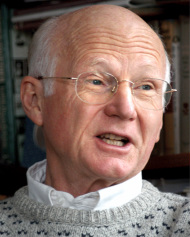
He helped organize coalitions that led in passage of dozens of ethics and open government laws and five major amendments to the Rhode Island Constitution, including the 2004 Separation of Powers Amendment.
West hosted many delegations from the U.S. State Department’s International Visitor Leadership Program that came to learn about ethics and separation of powers. In 2000, he addressed a conference on government ethics laws in Tver, Russia. After retiring from Common Cause, he taught Ethics in Public Administration to graduate students at the University of Rhode Island.
Previously, West served as pastor of United Methodist churches and ran a settlement house on the Bowery in New York City. He helped with the delivery of medicines to victims of the South African-sponsored civil war in Mozambique and later assisted people displaced by Liberia’s civil war. He has been involved in developing affordable housing, day care centers, and other community services in New York, Connecticut, and Rhode Island.
West graduated, Phi Beta Kappa, from Hamilton College in Clinton, N.Y., received his masters degree from Union Theological Seminary in New York City, and published biblical research he completed at Cambridge University in England. In 2007, he received an honorary Doctor of Laws degree from Rhode Island College.
Since 1965 he has been married to Anne Grant, an Emmy Award-winning writer, a nonprofit executive, and retired United Methodist pastor. They live in Providence and have two grown sons, including cover illustrator Lars Grant-West.
This electronic version of SECRETS & SCANDALS: Reforming Rhode Island, 1986-2006 omits notes, which fill 92 pages in the printed text
Rhode Island's History of Political Corruption
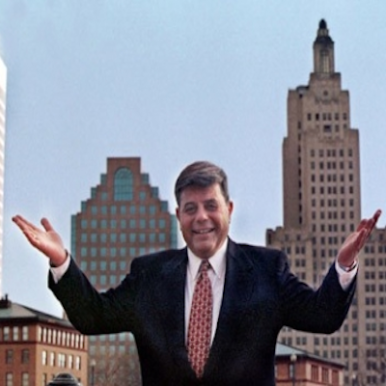
Buddy Cianci
Vincent A. "Buddy" Cianci resigned as Providence Mayor in 1984 after pleading nolo contendere to charges of assaulting a Bristol man with a lit cigarette, ashtray, and fireplace log. Cianci believed the man to be involved in an affair with his wife.
Cianci did not serve time in prison, but received a 5-year suspended sentence. He was replaced by Joseph R. Paolino, Jr. in a special election.
Joseph Bevilacqua
Joseph Bevilacqua was RI Speaker of the House from 1969 to 1975, and was appointed as Chief Justice of the State Supreme Court in 1976. It was alleged that Bevilacqua had connections to organized crime throughout his political career.
According to a 1989 article that appeared in The New York Times at the time of his death:
The series of events that finally brought Mr. Bevilacqua down began at the end of 1984... stating that reporters and state police officers had observed Mr. Bevilacqua repeatedly visiting the homes of underworld figures.
The state police alleged that Mr. Bevilacqua had also visited a Smithfield motel, owned by men linked to gambling and drugs...
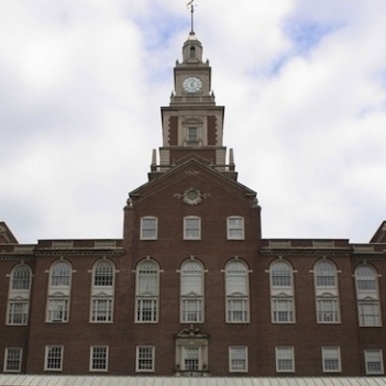
Thomas Fay
Thomas Fay, the successor to Bevilacqua as Chief Justice of the Supreme Court, resigned in 1993, and was later found guilty on three misdemeanor counts of directing arbitration work to a partner in his real estate firm, Lincoln Center Properties.
Fay was also alleged to use court employees, offices, and other resources for the purposes of the real estate firm. Fay, along with court administrator and former Speaker of the House, Matthew "Mattie" Smith were alleged to have used court secretaries to conduct business for Lincoln, for which Fay and Smith were business partners.
Fay was fined $3,000 and placed on one year probation. He could have been sentenced for up to three years in prison.

Brian J. Sarault
Former Pawtucket Mayor Brian J. Sarault was sentenced in 1992 to more than 5 years in prison, after pleading guilty to a charge of racketeering.
Sarault was arrested by state police and FBI agents at Pawtucket City Hall in 1991, who alleged that the mayor had attempted to extort $3,000 from former RI State Rep. Robert Weygand as a kickback from awarding city contracts.
Weygand, after alerting federal authorities to the extortion attempt, wore a concealed recording device to a meeting where he delivered $1,750 to Sarault.

Edward DiPrete
Edward DiPrete became the first Rhode Island Governor to be serve time in prison after pleading guilty in 1998 to multiple charges of corruption.
He admitted to accepting bribes and extorting money from contractors, and accepted a plea bargain which included a one-year prison sentence.
DiPrete served as Governor from 1985-1991, losing his 1990 re-election campaign to Bruce Sundlun.
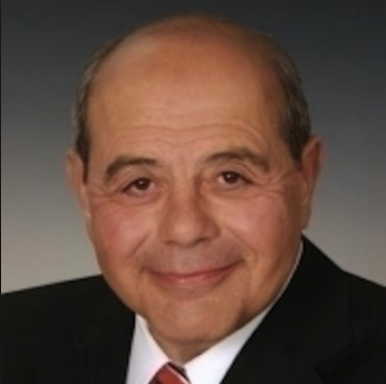
Plunder Dome
Cianci was forced to resign from the Mayor’s office a second time in 2002 after being convicted on one several charges levied against him in the scandal popularly known as “Operation Plunder Dome.”
The one guilty charge—racketeering conspiracy--led to a five-year sentence in federal prison. Cianci was acquitted on all other charges, which included bribery, extortion, and mail fraud.
While it was alleged that City Hall had been soliciting bribes since Cianci’s 1991 return to office, much of the case revolved around a video showing a Cianci aide, Frank Corrente, accepting a $1,000 bribe from businessman Antonio Freitas. Freitas had also recorded more than 100 conversations with city officials.
Operation Plunder Dome began in 1998, and became public when the FBI executed a search warrant of City Hall in April 1999.
Cianci Aide Frank Corrente, Tax Board Chairman Joseph Pannone, Tax Board Vice Chairman David C. Ead, Deputy tax assessor Rosemary Glancy were among the nine individuals convicted in the scandal.
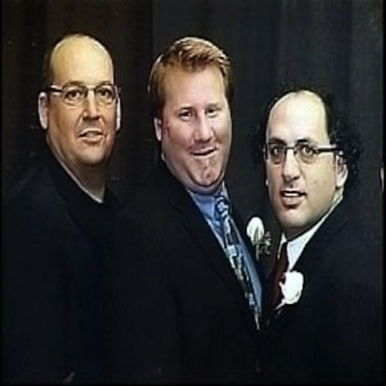
N. Providence Councilmen
Three North Providence City Councilmen were convicted in 2011 on charges relating to a scheme to extort bribes in exchange for favorable council votes. In all, the councilmen sought more than $100,000 in bribes.
Councilmen Raimond A. Zambarano, Joseph Burchfield, and Raymond L. Douglas III were sentenced to prison terms of 71 months, 64 months, and 78 months, respectively.
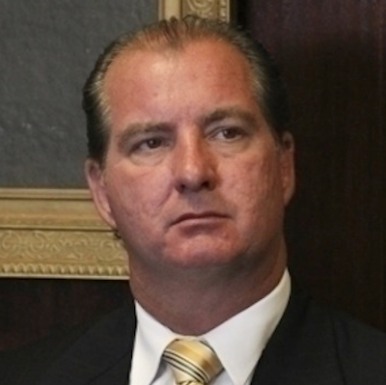
Charles Moreau
Central Falls Mayor Charles Moreau resigned in 2012 before pleading guilty to federal corruption charges.
Moreau admitted that he had give contractor Michael Bouthillette a no-bid contract to board up vacant homes in exchange for having a boiler installed in his home.
He was freed from prison in February 2014, less than one year into a 24 month prison term, after his original sentence was vacated in exchange for a guilty plea on a bribery charge. He was credited with tim served, placed on three years probation, and given 300 hours of community service.
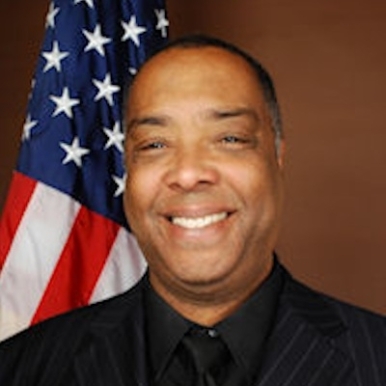
Joe Almeida
State Representative Joseph S. Almeida was arrested and charged on February 10, 2015 for allegedly misappropriating $6,122.03 in campaign contributions for his personal use. Following his arrest, he resigned his position as House Democratic Whip, but remains a member of the Rhode Island General Assembly.
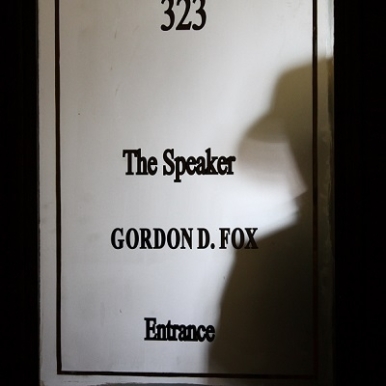
Gordon Fox
The Rhode Island State Police and FBI raided and sealed off the State House office of Speaker of the House Gordon Fox on March 21--marking the first time an office in the building has ever been raided.
Fox pled guilty to 3 criminal counts on March 3, 2015 - accepting a bribe, wire fraud, and filing a false tax return. The plea deal reached with the US Attorney's office calls for 3 years in federal prison, but Fox will be officially sentenced on June 11.


