We Can and Must Overcome Vaccine Hesitancy - Rob Horowitz
Rob Horowitz, MINDSETTER™
We Can and Must Overcome Vaccine Hesitancy - Rob Horowitz
The World Health Organization defines vaccine hesitancy as “delay in acceptance or refusal of vaccines despite availability of vaccine services.” While there has already been some progress in reducing this hesitancy when it comes to COVID-19 vaccines, it still remains strong enough to stand in the way of reaching herd immunity and as a result lessening the odds of the emergence of more variants. Three-in-10 American adults still say they are not planning to get a shot, according to a recent NPR/PBS News Hour/Marist Poll.
The parts of the population that display the strongest resistance to getting vaccinated are Trump supporters and Republicans. “Among Republican men, 49% said they did not plan to get the shot, compared with just 6% of Democratic men who said the same,” reports the NPR/PBS News Hour/Marist Poll. “Among those who said they supported President Trump in the 2020 election, 47% said they did not plan to get a coronavirus vaccine compared with just 10% of Biden supporters.”
GET THE LATEST BREAKING NEWS HERE -- SIGN UP FOR GOLOCAL FREE DAILY EBLASTA recent Kaiser Family Foundation (KFF) COVID Vaccine trends survey provides similar findings: “While vaccine enthusiasm increased for both Democrats and independents, it has not shifted among Republicans, who remain the most resistant, with 33% saying they will definitely not get the vaccine or will get it only if required to do so for work, school or other activities.”
There has been steady progress in reducing vaccine hesitancy among African Americans and Latinos, groups that have been traditionally among the most reluctant. It remains high, however, among lower-income and younger members of these sub-groups. Getting more people in these harder-to-reach communities vaccinated appears to be one of the keys to making people less hesitant. “Black and Hispanic adults are also among those most likely to say they want to ‘wait and see’ how the vaccine is working for other people before getting vaccinated themselves,” according to KFF.
Over-all, stepping up efforts to supply information about the vaccine will be important to reducing vaccine hesitancy going forward. About half of Americans say they don’t know enough yet about “the vaccine’s side effects or effectiveness,” with an even greater percentage of Blacks, Latinos and younger adults saying they need more information.
Employing trusted messengers remains essential. Health professionals, doctors, nurses and other caregivers, are still the most trusted source of information on the COVID-19 vaccine, according to multiple surveys. But other sources people deem credible varies by sub-group. For evangelicals, a group with strong pockets of vaccine hesitancy, for example, ministers and other faith leaders who are willing to say they have taken the vaccine and urge members of their faith community to do so, can be highly influential. There have already been some positive and productive developments in this area, as reported by the New York Times and other outlets.
National, state and local Republican leaders have an especially important role to play in debunking misinformation about the vaccine, which is pervasive on right-wing websites, in large measure by taking the vaccine themselves, and publicizing the fact that they did so and the reasons why. Some of these leaders, including Senate Minority Leader Mitch McConnell, have already done so, but more need to follow suit. Most importantly, elected and other leaders in MAGA world need to step-up.
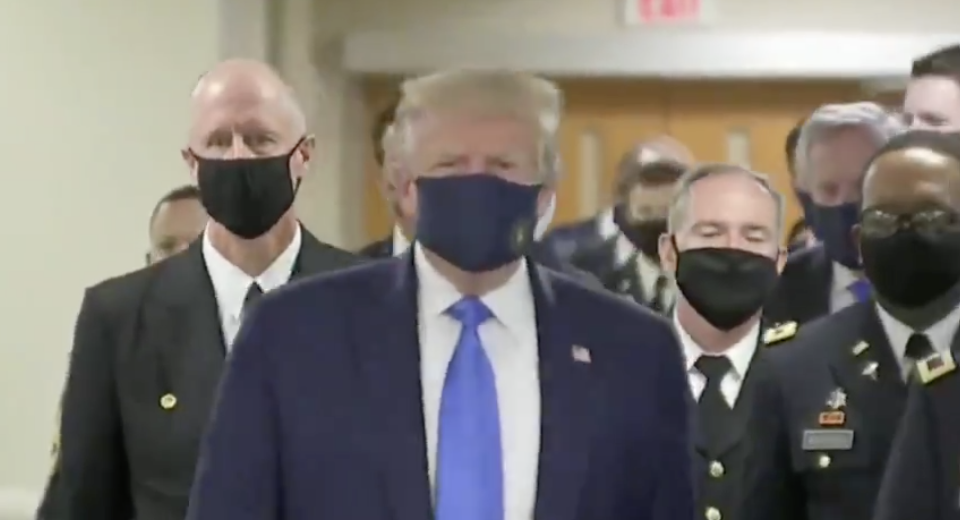
President Trump is the individual who can make the most difference in persuading the largest number of people who are still vaccine-hesitant, so it was unfortunate that he did not join all the former presidents in their recent joint PSA talking up getting vaccinated. Still, it has been credibly reported that Mr. Trump did get the shot privately before he left the White House. Further, he did include one positive mention about people getting vaccinated in his recent CPAC speech. A concentrated public relations and advertising effort by the former president that combined taking a victory lap for the success of Operation Warp Speed with urging all to get vaccinated like he did could pay big health dividends for his supporters and the American people in general. It is also the best thing he could do to repair his tattered image.
Of course, what Mr. Trump and other politicians do is out of our control. We each can make a positive difference by getting vaccinated as soon as we are eligible and sharing the fact that we did so with our family and friends as well as through social media. According to KFF, “knowing someone who has been vaccinated” is positively correlated with enthusiasm for getting the vaccine.
Taking on vaccine hesitancy, so we can curb the virus and return to “normal” is one thing we can all do together. The more of us that do so, the sooner we can begin safely enjoying all that we have missed.