


UPDATED: Aerial Spraying to Combat EEE Begins Sunday Night at Dusk
GoLocalProv News Team
UPDATED: Aerial Spraying to Combat EEE Begins Sunday Night at Dusk
Spraying is expected to start at about 7:00 PM.
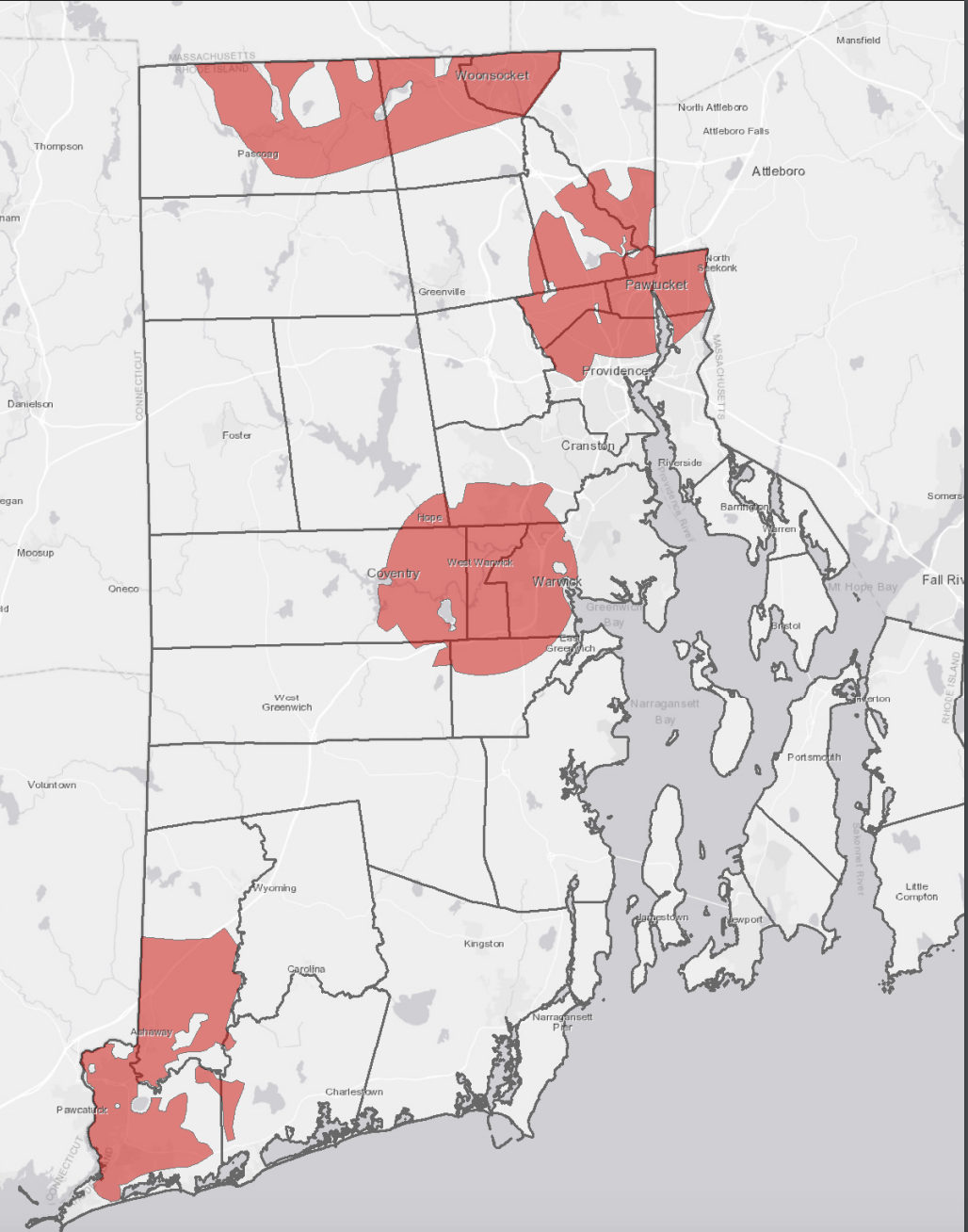
Risk areas that will be sprayed include parts of communities in northern Rhode Island bordering the Massachusetts towns of Uxbridge, Douglas, and Mendon, where EEE has recently been confirmed in three horses.
GET THE LATEST BREAKING NEWS HERE -- SIGN UP FOR GOLOCAL FREE DAILY EBLASTGoLocal spoke with Keith Salisbury of the Rhode Island Beekeepers Association who said that DEM had briefed his organization on Sunday. He said the group has not taken an official position on the spraying. Salisbury said he personally supports the spraying.
"As applied, the product should have no impact on non-target species, which includes bees. While the product is toxic to bees, we apply at times where bees are NOT active outside the hive (after dusk) and once our product hits the ground, it breaks down immediately, so by the time bees are up and out of the hive in the morning, the product should have no impact," said Laura McGowan spokesperson for the company conducting the spraying.
SEE MAP OF SPRAYING AREAS
Another area includes Central Falls, where EEE was detected in two mosquitoes and announced August 15.
Another spraying zone includes parts of Westerly, where DEM has confirmed two positive EEE detections in mosquitoes as well as a case being transmitted to a horse.
The fourth zone will cover West Warwick, which is the location of the state’s first human case of EEE, and parts of perimeter communities.
“Although spraying will take place in a few select sites in Rhode Island, people in these communities and throughout the state should continue to take precautions to prevent mosquito bites. Your first line of protection remains to limit time outdoors at sunrise and sundown, wearing long-sleeved shirts and long pants when outside, and using EPA-approved bug spray that has DEET,” said RIDOH Deputy Director Ana Novais.
All spraying will occur in the evening and overnight hours.
This aerial spraying comes after the state conducted larvicide treatments on Thursday, as GoLocalProv reported.
Determining Critical Risk Areas
The determination of critical risk was made based on results of mosquito samples in Rhode Island, Massachusetts, and Connecticut and cases of EEE in animals in Rhode Island.
As GoLocalProv reported, there has been one human case of EEE in Rhode Island this year and one horse tested positive.
According to the DEM, spraying will occur in four-mile radiuses around positive samples or cases.
Some areas will be excluded, including open bodies of water (including drinking water reservoirs), certain coastal areas, and natural areas that are not densely populated.
Organic farms will also be excluded.
The Spraying
The product used in this application is called Anvil 10+10. It has been used extensively in both ground-level and aerial spraying and has proven to be extremely effective in killing mosquitoes worldwide for over 20 years.
Massachusetts officials used the same product in recent aerial spraying in Bristol, Plymouth, Worcester, and other counties.
Anvil is registered by the US Environmental Protection Agency (EPA) and in Rhode Island and Massachusetts for this use.
This product is being used at very low concentrations.
No adverse health risks are expected with its use for mosquito control.
For those who want to limit their exposure to this pesticide, they can avoid being outdoors while spraying is occurring and can keep their windows closed.